The aspects taken into consideration
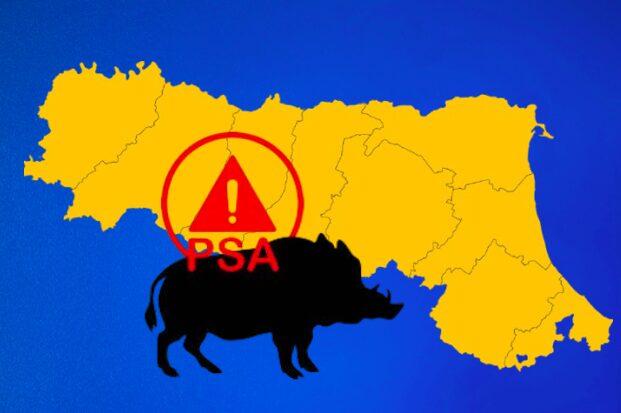
Appreciation for the coordination and collaboration between Veterinary Services and Provincial Police, confirmation of hunters' awareness of the rules established by the Commissioner's ordinances, verification of the timely management of meat traceability, and verification of the accuracy of biosecurity controls on farms and carcass analyses. These are the key aspects examined by the audit conducted by inspectors from the European Union Directorate-General for Health and Food Safety commission regarding the management of African Swine Fever (ASF) in Italy, which first affected Lombardy (18-22 September) and then Emilia-Romagna (22-25 September) . The outcome of the audit, which concluded on September 26, highlighted, thanks to the coordination of the new Commissioner's structure, a national disease control strategy that is significantly clearer and more defined than the findings of the previous audit in 2023.
Great team work
This positive outcome comes on the eve of the swine fever management meeting convened by the Province of Piacenza. The meeting will be attended by the Special Commissioner for ASF, Giovanni Filippini, and regional councilors Massimo Fabi (Health Policies) and Alessio Mammi (Agriculture), who will meet with representatives of the local pig sector. "The recent European audit recognized the great teamwork that our Region, together with the Veterinary Services, Provincial Police, ATCs, and the entire pig sector, is carrying out in the management of African swine fever," stated Fabi and Mammi. "The inspectors appreciated the level of coordination, the hunters' awareness of compliance with ordinances, and the system implemented for meat traceability: a result that demonstrates the commitment and widespread responsibility throughout the entire supply chain."
Production and economic continuity
"The tools and resources adopted so far have yielded tangible results," the councilors continued, "allowing us to continue pursuing the dual objective of protecting animal health and ensuring the productive and economic continuity of a sector that represents excellence in the Emilia-Romagna and national agri-food sector. For this reason, we will continue to work with the Special Commissioner, local institutions, and the production sectors to ensure that the emergency management remains effective, consistent, and focused on protecting farms and the pig supply chain."
The audit carried out in Emilia-Romagna
During the European audit in Emilia-Romagna, two hunting lodges in the Piacenza and Parma areas were visited. They appreciated the coordination between the Veterinary Services and the Provincial Police, the hunters' awareness of the regulations, and the proper traceability of meat, with no non-compliance found. At an industrial slaughterhouse in Parma, traceability procedures and official veterinary controls were verified, ensuring compliance with both EU requirements and export regulations to third countries. Finally, biosecurity controls were examined at the Veterinary Services offices in Parma and Piacenza. They found a system that was essentially adequate for preventing the introduction of the virus into farms. The effectiveness of this system is further demonstrated by the fact that during the past summer months, notoriously more critical in this regard, no outbreaks of African swine fever were detected in farmed pigs.
The resources made available to date in the regional territory
To combat the spread of African swine fever, the Emilia-Romagna Region has implemented a comprehensive plan of interventions, combining economic, hunting, and land-based control measures. Four calls for proposals totaling €11,1 million have been launched, supporting over 150 companies in implementing biosecurity measures. On the hunting front, wild boar hunting has been extended from three to four months, and year-round selection with extended hours has been introduced. These measures have already produced tangible results: wild boar damage has decreased from €800 to just over €200. Furthermore, a network of Territorial Operational Groups (GOT) has been established from Piacenza to Bologna to ensure constant and effective local control. (Source: Emilia-Romagna Region)
You May Also Like ..