The clarification
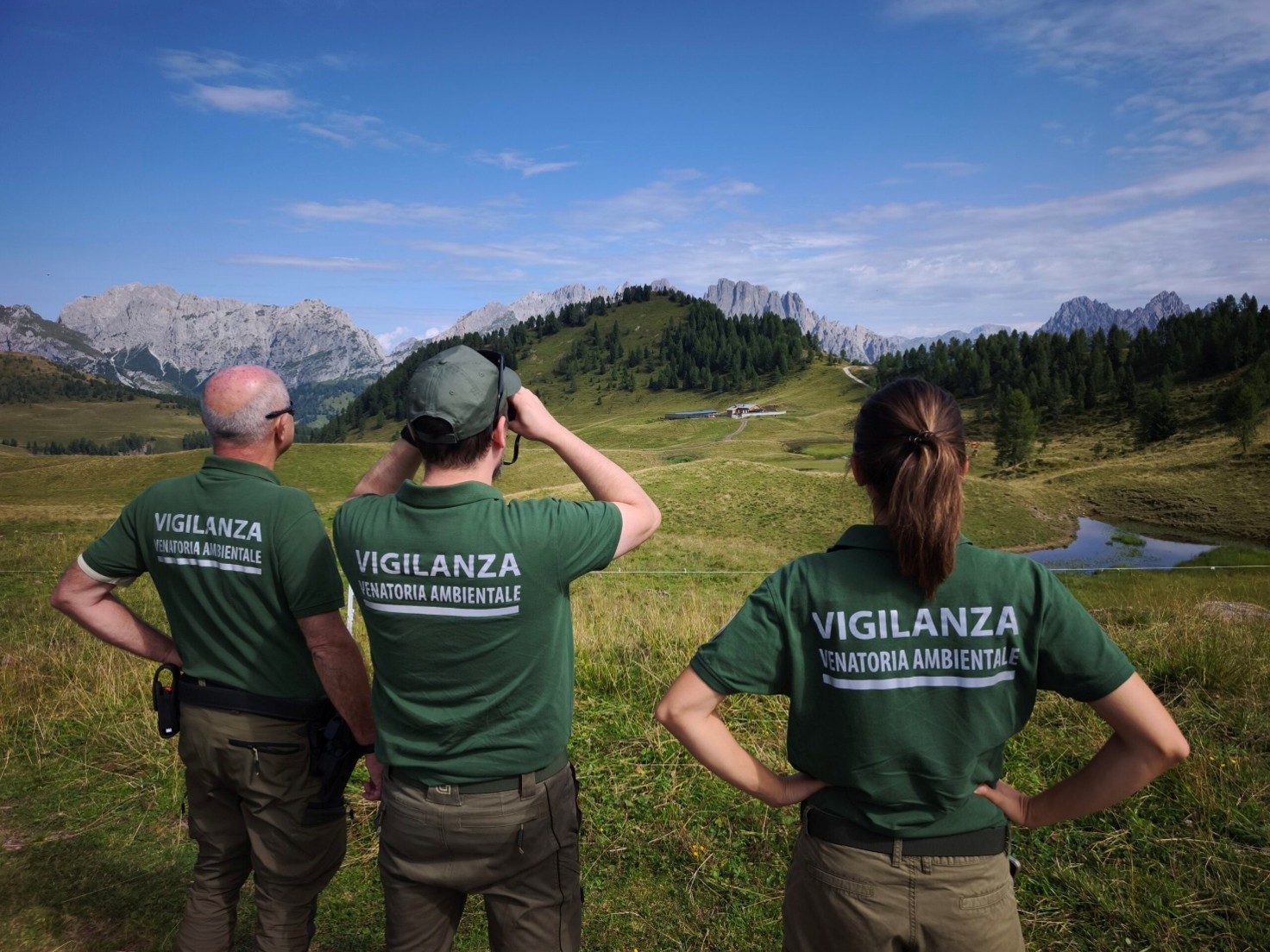
In reference to recent statements released by the Italian Animalist Party of Friuli Venezia Giulia and the Animal Pride Defending Association regarding the activities of the Volunteer Game Wardens of Federcaccia FVG , we believe it is appropriate to clarify matters by simply recalling the provisions of the current national and regional legislation. The statement that, in the case of the Federcaccia Wardens, "the inspector coincides with the controlled" does not accurately represent the hunting surveillance system established by law. Federcaccia has not, in fact, independently assumed control functions. Article 27 of Law No. 157 of 11 February 1992 expressly provides for the participation in surveillance by volunteer wardens from hunting associations, as well as those from agricultural and environmental protection associations, who meet the requirements set forth by the legislation.
Law enforcement
The same principle is reaffirmed even more clearly by the Friuli Venezia Giulia legislation. Article 35 of Regional Law No. 2 of March 6, 2008, in the current version, establishes that enforcement of the law is entrusted to the Region and that: "Volunteer rangers from hunting, agricultural, and environmental protection associations participate in hunting surveillance, and their coordination is entrusted to the Region." The same provision also establishes that the Region organizes annual training and refresher courses for those entrusted with hunting surveillance, with particular emphasis on hunting, environmental protection, and wildlife. Therefore, defining this activity as a simple form of "internal self-regulation within the category" does not appear consistent with the current regulatory framework: Volunteer Game Guards participate in a surveillance system expressly provided for by law and coordinated by the Friuli Venezia Giulia Region.
Situations of incompatibility
Regional legislation also contains specific provisions aimed at avoiding conflicts of interest. Article 35, paragraph 5-bis, of Regional Law 6/2008 establishes that a volunteer ranger admitted to hunting in a hunting reserve may not exercise surveillance functions in the reserve to which they are admitted and may not perform such functions during their hunting activity. A similar guarantee is contained in national legislation: Article 27, paragraph 5, of Law 157/1992 prohibits Volunteer Gamekeepers from exercising hunting activities while carrying out their duties. Therefore, invoking the principle nemo iudex in causa sua, according to which no one should be the judge of a matter that directly concerns them, is also inappropriate. The Volunteer Gamekeeper is not, in fact, the "judge" of the hunter being inspected, but rather a person to whom the law assigns specific surveillance and verification functions, to be exercised within the limits established by law.
Rifle Port
Article 28 of Law 157/1992, cited in the disputes, regulates the powers and duties of hunting officers. The law provides, among other things, that those responsible for surveillance pursuant to Article 27 may request from persons found hunting or exercising a firearm to produce a hunting license, a hunting license, insurance documentation, and the wild animals shot or captured. The same law further distinguishes these duties from the activities that, in the cases provided for, are reserved for officers and agents performing judicial police functions. The process required to obtain the Volunteer Game Warden license in Friuli Venezia Giulia also demonstrates that it is not a qualification awarded independently by a hunting association. Article 15 of Regional Law 24/1996 establishes that to obtain the certificate of suitability, it is necessary to pass an exam at the Regional Administration.
Examination commission
Article 17 of the same regional law also establishes that the Examination Commission is appointed by the Regional Councillor responsible for hunting and is composed of, in addition to the chairman designated by the Councillor, two experts appointed by the hunting associations, two by the agricultural associations, and two by the environmental associations. Therefore, no one has ever argued that the Federcaccia Volunteer Game Guards should replace the Regional Forestry Corps or other competent bodies, nor did the plan announced by Federcaccia FVG have this intention. The Federcaccia FVG Game Guards are Public Officials for hunting surveillance pursuant to Article 13 of Law 689/81 and Article 331 of the Code of Criminal Procedure. For animal welfare, however, they are Judicial Police officers pursuant to Article 57/3 of the Code of Criminal Procedure and Law 189/2004. The "territorial protection" announced by Federcaccia FVG must be interpreted precisely in this sense: prevention, information, surveillance, and monitoring of compliance with the rules, within the scope of the responsibilities recognized by the Volunteer Game Guards.
Compliance with standards
Federcaccia FVG also believes that representing the hunting world is not incompatible with promoting legality. On the contrary, those who represent hunters have a duty to promote proper behavior, compliance with regulations, and the safety and protection of wildlife and the environment. Those who break the law cannot find justification in their membership. The Federcaccia Volunteer Gamekeepers will therefore continue to carry out their activities in full compliance with Law 157/1992 and the regulations of the Friuli Venezia Giulia Region, collaborating within the surveillance system established by law. Hunting surveillance is not an activity that Federcaccia has assigned itself: it is a function in which the Volunteer Gamekeepers are required by law to participate. And respect for the law, in the interests of honest hunters, wildlife, and the entire community, remains a fundamental principle for Federcaccia FVG (source: Federcaccia)
You May Also Like ..