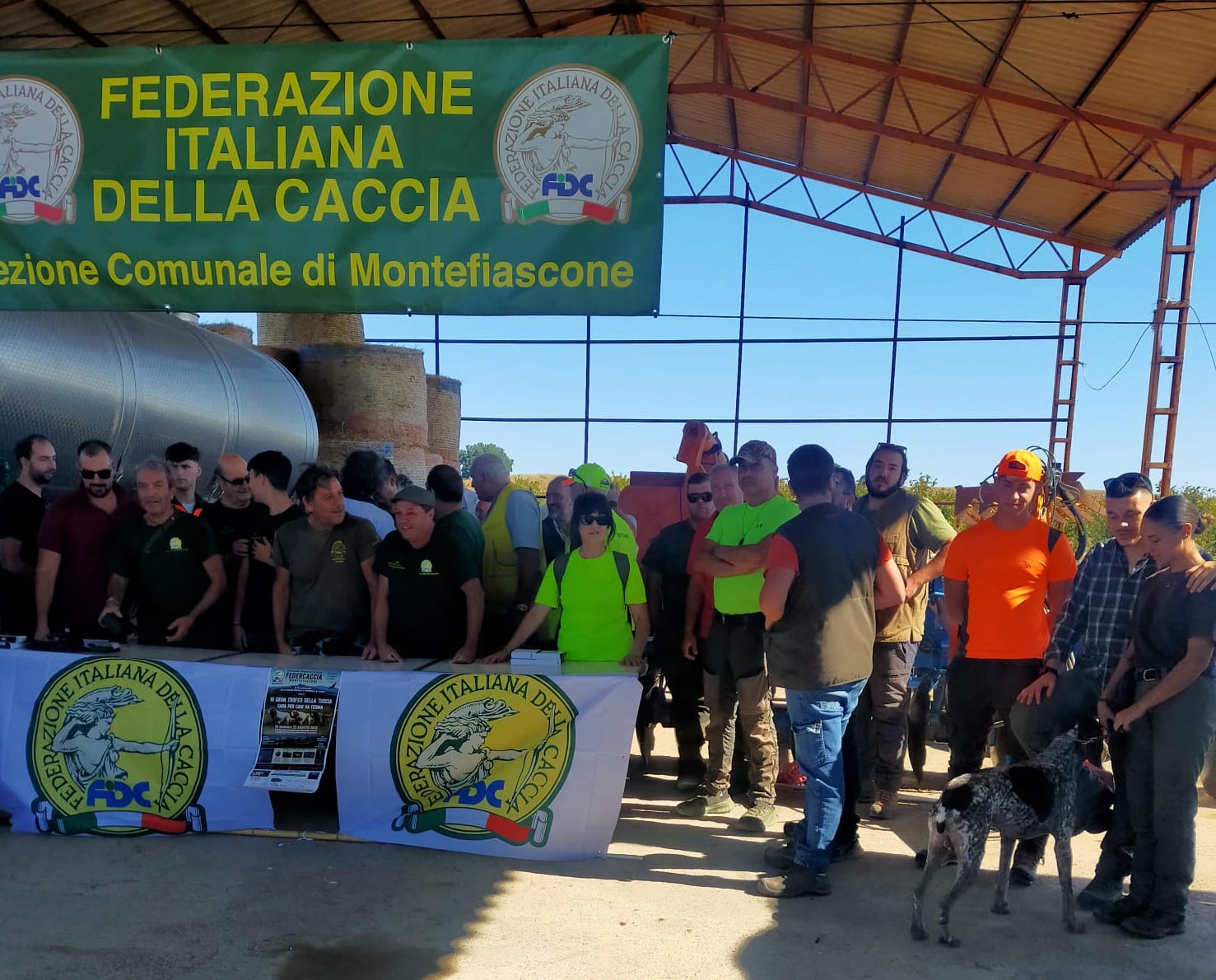
Third edition
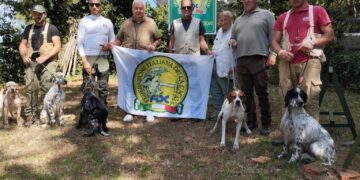
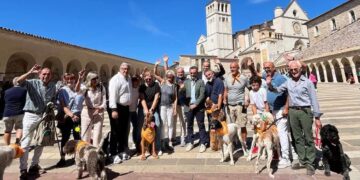
Last Sunday, the Montefiascone chapter of the Italian Hunting Federation organized the 3rd Gran Trofeo della Tuscia, a canine competition for pointing and flushing dogs, continuing the events organized in previous years by the same association. Initially established as an amateur competition, thanks to the commitment and efforts made in recent years, the event has managed to carve out an increasingly important niche in the hunting dog scene, entering the circuit of recognized national competitions. The regional competition, in fact, also counted toward selection for the World Championships for Pointing Dogs, confirming the growing prestige of the Montefiascone event.
The categories in the competition
The competition included several categories based on the dogs' characteristics: English Hunters, English Competition Dogs, Continental Hunters, Continental Competition Dogs, Youth, and Stalking. Competitors competed in searching and flushing game, specifically pheasants, without shooting. To determine the overall winners in the Hunters and Competition Dogs categories, a barrage was also conducted, during which the dog's movement, ground clearance, and the breed's characteristic style were evaluated.
Standings
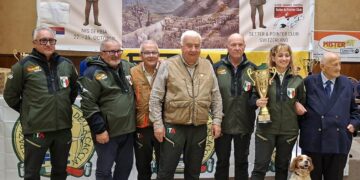
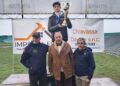
The dogs handled by Roberto Zamperini performed particularly well, excelling in the various categories of the event. At the end of the trial, the dogs that finished first in their respective categories were:
Young people: Mirko Fabiani with Tango, English Setter;
Search: Cristian Tacchi with Benny, Springer Spaniel;
English competitors: Roberto Zamperini with Cooper, English Setter;
English hunters: Roberto Zamperini with Quark, English Pointer;
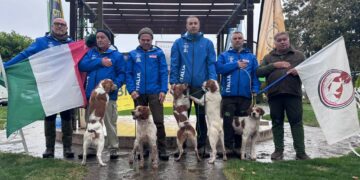
Continental competitors: Antonio Falasca with Erdut, Brittany Spaniel;
Continental hunters: Antonio Falasca with Nathan, Brittany Spaniel.
At the end of the jump-off, the title of 1st Overall in the competition category went to Roberto Zamperini with Cooper, an English Setter, while in the hunter category Zamperini won again with Quark, an English Pointer.
Many young people
A particularly significant aspect was the participation of numerous young dog handlers, some of them still minors. This presence represents a positive sign for the future of dog hunting and demonstrates the event's ability to introduce younger generations to a discipline based on passion, technique, respect for the rules, and a strong relationship with one's handler. The trials, which concluded at 9:40 a.m., were conducted in compliance with the guidelines, concluding well before 11:00 a.m., when strong sunlight can make working conditions more challenging for the dogs. The cool morning, however, favored the competition, which took place across four different competition areas made available by the Antiche Cantine Leonardi winery, to which the organizers extend their thanks for their support.
The judges' approach
Special thanks also go to federal judges Pietro Miluzzi, Ferdinando Beccarini, Antonio Marchioni, Marco Broglioni, and Alessandro Taglia, who evaluated competitors and assistants. Their professionalism and experience contributed significantly to the success of the event. One aspect appreciated by the participants was the judges' approach, which went beyond simply evaluating competitive performance. Even competitors who failed to place were able to benefit from the advice and guidance provided to identify any shortcomings and improve their dogs' performance. Particularly significant in this regard was the feedback from the many young participants, who expressed appreciation for the opportunity to interact with expert judges and receive valuable advice for their own development.
Synergistic collaboration
President Luca Rosati expressed his satisfaction with the event, which saw the synergistic collaboration between Federcaccia Montefiascone, Giovani Federcaccia, local sponsors, federal judges, and all those involved in its organization. This synergy has transformed an event originally conceived as an amateur event into a major event for dog hunting, combining competition, training, and passion. Federcaccia's work represents an important tool for enhancing and promoting the region, helping to raise its profile while also significantly contributing to the growth of local dog hunting and the protection and enhancement of the region's rural heritage (source: FIDC).
You May Also Like ..