Data from the national portal
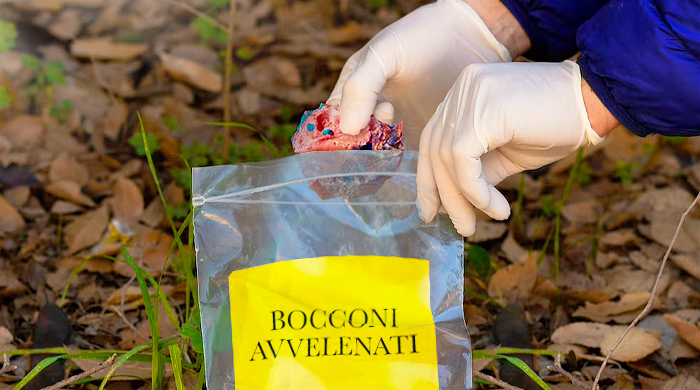
Dog-handler units trained to combat animal poisoning , a widespread phenomenon in Emilia-Romagna. This is the goal of the Unione della Romagna Faentina project, which the Emilia-Romagna Region is supporting with €30 in funding for a total cost of €44.800. The green light came recently from the Regional Council. In Emilia-Romagna, between 2009 and 2024, 1.920 animals were poisoned. This is according to data from the National Portal on Intentional Animal Poisoning, managed by the Experimental Zooprophylactic Institute of Lazio and Tuscany, based on 5.763 samples analyzed. Furthermore, according to a regional study, between 2009 and 2018, out of 603 wild fauna samples analyzed, 220 animals (36,5%) were found to be poisoned. Among the most affected species are foxes (up to 67% of cases) and wolves (around 26%).
Prevention to be strengthened
For this reason, the Emilia-Romagna Region intends to promote, through this project, the strengthening of prevention, monitoring, and institutional collaboration, including through the involvement of local veterinary services, law enforcement, local authorities, and associations to ensure the protection of public health and animal welfare. "Animal poisoning," emphasizes Massimo Fabi, Regional Councilor for Health Policies, "is not only a serious threat to animal welfare, but also a risk to human health and the environment. The Region has decided to support the project promoted by the Unione Romagna Faentina, a particularly important initiative because the Unione has demonstrated particular sensitivity to this issue, in light of recent poisoning incidents and the discovery of poisoned bait in public parks. Being able to count on trained teams that respond promptly is an opportunity, given that, to date, only a few units of the Carabinieri Forestali (Forestry Police) are operational, and these are located in Tuscany. Our goal is to provide each province with a canine unit."
You May Also Like ..





The project
Proposed by the Unione della Romagna Faentina on behalf of the SAR Team Faenza Unità Cinofile association, the project aims to prevent and combat poisoning in urban and non-urban areas by establishing dog-handler anti-poison canine units (UCA) to support local authorities, regional veterinary services, and in collaboration with law enforcement. There will be 28 training days, divided into theory and field practice, according to the European standards of the Life Pluto model, scheduled to begin in 2027. Training activities include finding the bait, sending it to the Experimental Zooprophylactic Institute of Lombardy and Emilia-Romagna, entering data into the National Poisoning Portal (geographical coordinates, characteristics of the area where the animal was found, etc.), and cleanup. (Source: Emilia-Romagna Region)