Emergency management
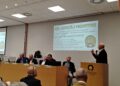
Two meetings with institutions, representatives of agricultural and agri-food associations, healthcare and veterinary personnel (GOT), and local hunting authorities (ATC) were held to review the management of the African Swine Fever (ASF) emergency and the measures implemented by the Region to protect livestock farms and the pig industry in the provinces of Modena and Reggio Emilia. These were the central topics of the meetings held in Modena and Reggio Emilia, attended by the regional councilors for Agriculture, Alessio Mammi, and Health, Massimo Fabi, along with the special commissioner for ASF, Giovanni Filippini.
Sectors and supply chains
"The pork sector is crucial to the Emilia-Romagna economy, and the cured meats supply chain is the most consolidated and structured nationwide, worth €20 billion, €5 billion of which goes to local production," Mammi emphasizes. "To protect the extraordinary excellence of meat processing, we must deploy all available defense tools and continue to act in a unified manner: following a national strategy, as with any viral infection, that involves hunters, farmers, and the local veterinary system across the country." "Our region is on the front line of the disease's expansion," the councilor continued. "It is a complex area to protect, given that it is largely located in the Apennines, and the challenge of containing the spread of the virus remains long and difficult. With the territorial containment and depopulation of wild boars in the provinces of Reggio and Modena, we have achieved good results, also thanks to the valuable collaboration of the farmers, who have been attentive and involved, and who have received training, as well as the local veterinary service, and who have implemented biosecurity measures on their farms, in which we have invested 11 million euros. I thank Commissioner Filippini for his work, and as a Region, we will continue to do our part in all affected areas."
A common goal
"The Region is deploying all its expertise—from the healthcare system to agriculture to hunters—to tackle the disease, with the Territorial Operational Groups (GOT) of Northern Emilia playing a key role, working in a coordinated manner toward the same goal," Fabi stated. "In addition to physical barriers, we have also implemented operational barriers that, through constant, daily procedures, serve to prevent the virus from spreading." Special Commissioner Giovanni Filippini spoke, detailing the infection containment strategy, emphasizing the importance of building a containment line in the Apennines, bordering neighboring regions, which will ensure a virus-free border.
The resources made available so far in Emilia-Romagna
To combat the spread of African swine fever, the Emilia-Romagna Region has implemented a comprehensive plan of interventions, combining economic, hunting, and land-control measures. Four calls for proposals totaling €11,1 million have been launched, supporting over 150 affected farms. In addition, €3 million has been allocated to wild boar and burrow depopulation efforts, including €1,1 million for provincial police forces and nearly €2 million for the national commissioner's office, with the involvement of specialized firms. On the hunting front, wild boar hunting has been extended from three to four months, year-round selection has been introduced with extended hours, and controlled hunting is now permitted at any time and in any season, with no limits on the quantity of animals taken. These measures have already produced tangible results: damage caused by wild boar has decreased from €800 to just over €200. Furthermore, a network of Territorial Operational Groups (GOT) has been established from Piacenza to Bologna to ensure constant and effective presence in the area.
The numbers of the pork supply chain
In Emilia-Romagna, there are 981 farms and just under a million pigs, approximately 3 million pigs are slaughtered, 39% of which are nationally, and 42 specialized slaughterhouses operate. Approximately 250 companies, including 211 cured meat producers, are involved in the processing (slaughterhouses, cured meat producers, and slicers) of Prosciutto di Parma PDO, Coppa Piacentina PDO, Pancetta Piacentina PDO, Salame Piacentino PDO, Coppa di Parma PGI, Salame Felino PGI, Cotechino di Modena PGI, Mortadella Bologna PGI, Zampone di Modena PGI, Salame Cremona PGI, Salamini italiani alla cacciatora PDO, Culatello di Zibello PDO, and Prosciutto di Modena PDO. The production value of PDO-PGI cured pork products in Emilia-Romagna is approximately €1 billion (estimated based on ISMEA-Qualivita data), of which €300 million is for Parma Ham alone. The consumer value is €932 billion, while exports are worth approximately €4,98 million (source: Emilia-Romagna Region).
You May Also Like ..