New agreement
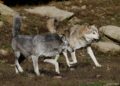
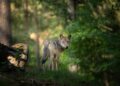
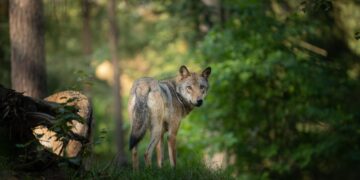
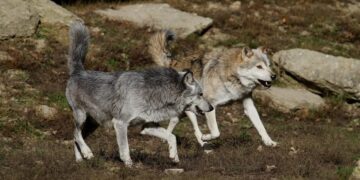
Two different territories, two experiences gained in different contexts, a single challenge: understanding, monitoring, and conserving the wolf , and addressing the complexities of its presence in the region with increasingly effective tools. This is the essence of the new agreement for collaboration in wolf monitoring and conservation signed by the Val Grande National Park and the Tuscan-Emilian Apennines National Park. This agreement stems from the desire to network skills and knowledge and transform the differences between the two regions into a shared resource. The collaboration represents a positive convergence of two entities: the Tuscan-Emilian Apennines National Park brings the long-standing experience of the Wolf Apennine Center (WAC), a permanent institutional reference center for wolf management on an interregional scale in the Northern Apennines, while the Val Grande National Park contributes its more recent experience in managing the species' presence in its own territory.
Coordinated collaboration
The agreement provides for coordinated collaboration in Canis lupus conservation activities, through the collection and archiving of data on the presence and distribution of packs, staff training, technical support for monitoring activities and any capture operations, and strengthening communication and awareness-raising efforts regarding the relationship between humans and wolves. A key aspect of this will be the exchange of expertise. PNATE staff will share their expertise in training and coordinating Val Grande Park operators, as well as providing, consistent with already scheduled activities, some equipment necessary for monitoring and capture operations. Val Grande Park, in turn, will provide logistical support and share available data on the species' presence in its territory.
Growth opportunity
"Collaboration between Parks is, first and foremost, an opportunity for mutual growth," the two organizations emphasize. "Comparing experiences gained in different regions means being able to look at the same phenomenon from different perspectives, learn from each other, and build increasingly effective management tools." The collaboration also looks to the future. The two Parks will be able to work together to develop multi-partner projects and submit proposals for specific financial instruments, further strengthening their ability to build networks and shared projects. The agreement will last two years and was signed free of charge, including, where possible, free logistical support for operators involved in joint activities.
Not just borders
"Biodiversity conservation cannot stop at the administrative boundaries of individual territories," the two Parks continue. "Species like the wolf range across much larger areas and therefore require shared knowledge, ongoing monitoring, and the ability to collaborate. Networking the Parks means making each of our efforts stronger and more effective." This approach begins with wolf conservation, but proposes a broader model: different territories choosing to understand each other, engage in dialogue, and share their learnings, because nature conservation becomes more effective when experiences aren't isolated, but circulate and generate new skills.
You May Also Like ..