The Courtauld Commitment agreement XNUMX
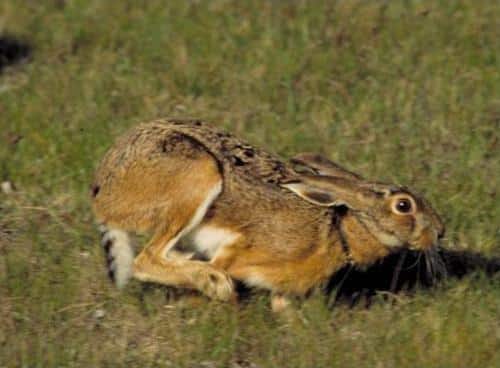
In an official press release from ANLC Sicilia dated September 16, 2026, the Association strongly criticized the holding of the day dedicated to "Training aimed at the sustainable hunting of the Italian hare (Lepus corsicanus) in Sicily" ; this activity is part of the 2026 Implementation Agreement signed between:
– Sicilian Region, Department of Rural and Territorial Development;
– Regional Council of Sicily of the FIdC;
– Office of Wildlife and Agro-Environmental Studies and Research of the national FIdC.
This Collaboration Agreement, approved by DDG No. 3403 of August 10, 2026, aims to implement, each within their respective areas of responsibility, the "Good Practices and Monitoring" Project – Sustainable Management of Sicilian Wildlife in 2026. Planned activities include the continuation of training for Italian hare hunters/monitors (underway since 2017, albeit initiated as part of a previous project that concluded in the 2024/25 season) and field monitoring of the species.
The clarification
In order to clarify the context in which these activities have developed over the years, it is useful to remember the following:
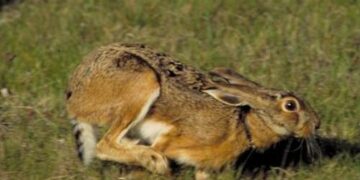
The Italian hare is one of the five endemic Italian mammals (i.e. native to Italy) and is therefore of considerable importance for biodiversity;
According to IUCN criteria, the species is classified as “Vulnerable” according to the A2bcde criteria (Randi and Riga, 2025);
The condition of the Sicilian population of the species is better than that of the peninsular populations, to the point that Law no. 157/92 prohibits its hunting in the Peninsula.
At the request of the former INFS (now ISPRA), the Prime Ministerial Decree of 7 May 2003 (Official Journal no. 152 of 3 July 2003) was issued to reinstate the hunting of the Italian hare in Sicily (after its rediscovery as a species distinct from the European hare, Lepus europaeus, in 1996, which had led to its automatic exclusion from the list of huntable species throughout Italy). This was based on the strategy set out in the 2001 National Action Plan, which still requires preventive monitoring to authorize sustainable harvesting. The same applies to the current 2013-2018 Wildlife Hunting Plan.
Starting in the 2007/08 season, due to the difficulty in implementing the strategies envisaged in the National Action Plan, ISPRA issued unfavourable opinions regarding the hunting calendars regarding the huntability of the species, resulting in environmental associations filing appeals to the Regional Administrative Court (TAR), up until the 2012-2013 season, so much so that the regional administration was forced to suspend the hunt.
The 2017 project
In 2017, the FIdC (national and Sicilian) presented a Project to the Region (available at the link: https://pti.regione.sicilia.it/portal/page/portal/PIR_PORTALE/PIR_LaStrutturaRegionale/PIR_AssessoratoregionaledelleRisorseAgricoleeAlimentari/PIR_AzForesteDemaniali/PIR_Areetematiche/PIR_Altricontenuti/PIR_faunaven/PIR_PIR_faunaven_BASE/PIR_ProgettoLepreItalica/PROGETTO%20LEPRE%20ITALICA%20-%20Allegato%201%20-%20Progetto.pdf) aimed at overcoming this impediment, gradually starting monitoring activities (initially only in 3 ATCs and in 2025 in 17 ATCs out of 18) and thus reopening the hunt for this wild in Sicily, albeit on an experimental basis. It should also be noted that the monitoring, being primarily based on the voluntary work of trained but non-professional personnel, was carried out only in certain ATC territories and, consequently, hunting could only be carried out in the monitored areas.
This last aspect is often overlooked by those who would like to see the hunt for the Italian hare open across entire ATCs. The reason training events, such as the one criticized by ANLC Sicilia, are still held is precisely to gradually extend monitoring to larger areas.
The project, launched in 2017, was also welcomed by the Laboratory of Applied Zoology at the University of Palermo, with which a scientific collaboration was established, and by ISPRA itself.
From the 2025/26 season, the Sicilian Region has decided to build on the experience gained through the project promoted by FIdC and to provide in the Hunting Calendar for culling "only and exclusively in the areas identified for the purposes of implementing active management interventions, according to the criteria of the project "Towards the sustainable hunting of the Italian hare (Lepus corsicanus) in Sicily: best practices and monitoring actions", by the Wildlife Hunting Departments who will be able to make use of personnel trained and authorized to carry out said experimental culling".
The above summary was necessarily also presented during the recent training event held at the Catania Wildlife and Hunting Department, just as the results achieved over the years were duly illustrated.
The contested claims
At this point, we don't understand how ANLC has come to such untrue statements, especially considering that many of the course participants complimented the speakers' clarity and the quality of the course.
On the other hand, we ask ANLC Sicilia what it means to "revise the regulations on hunting through the adoption of targeted hunting plans, based on scientific monitoring and sustainable quotas, but open to all Sicilian hunters... and not limited to a small group of individuals selected on a case-by-case basis."
At this point, we wonder whether ANLC Sicilia has truly understood how the sustainable harvest of the Italian hare has been working for nine years, or whether it has just written for the sake of writing and protesting because the initiative for the Course is by the ITALIAN HUNTING FEDERATION, and therefore indigestible.
Other clarifications
Perhaps ANLC Sicilia believes that Federcaccia should not have been mentioned? Or does the Association believe that mentioning Federcaccia's work from 2017 to today could constitute proselytism? Using the Federcaccia and Regional logos in the presentations used is, moreover, legitimized by the aforementioned Collaboration Agreement.
In any case, what ANLC Sicilia wrote is completely untrue, stating that the communication took on "the tone of a true commercial proposition." The merits may bother ANLC Sicilia, but they are evident, numerous, and clearly reflected in the results achieved. In all these years, no one has ever bothered to ask or determine whether the registered hunters belonged to a specific association. Instead, they have made sure that access to training is open to all Sicilian hunters, especially since official notices, certifications, and licenses have been managed exclusively by the Sicilian Region.
You May Also Like ..



In closing, we invite ANLC Sicilia, for the future, not to make insinuations by spreading unfounded news with very serious veiled accusations (Regional Council of Federcaccia Sicilia).