
Hats off when a Deputy, or rather a MEP, like the Honorable Zanoni carries out his assignment in "this way" ... diligence should be an example for everyone !!! The problem is that you should do your job knowing the regulations well even when they clash with your own political and ideological thinking, but that would be asking too much of today's politician. After yet another shot by Hon. Zanoni it is good that the counterpart also comes into play and, as usual, the ANLC does so promptly, this time with a "straight leg" on the opponent "ignorant" of the regulations, without mincing words and above all with unequivocal evidence.
Let's start from the antipodes of the exceptions question:
– Everything is contained and explicitly written in the “Gospel” of hunting in Europe, entitled “Guide to the regulation of hunting under Directive 79/409/EEC on the conservation of wild birds”, where, leaving aside the derogation under letters A) and B), the modus operandi for a Member State to use this hunting system is discussed in detail;
- Let's clear up a dilemma immediately: Hunting practiced for recreational purposes is considered a "measured use" (see below, paragraph 3.5 - Judgment C-182/02 Ligue pour la protection des oiseaux and others), while obliging the State that makes it required to demonstrate that there are no other satisfactory methods;
“From the foregoing it emerges that the hunting of wild birds practiced for amateur purposes during the periods indicated in art. 7, no. 4, of the directive can correspond to a measured use authorized by art. 9, no. 1, lett. c), of the directive itself, as well as the capture and transfer of wild birds even outside the hunting season for the purpose of keeping them for use as live calls or for amateur purposes in fairs and markets ";
- Satisfactory methods: in paragraph 16 of the judgment, the Court provided an important clarification, observing that this condition: "cannot be considered satisfied when the hunting period permitted by way of derogation coincides unnecessarily with the periods in which the directive intends to establish a particular protection (see, to that effect, Commission v Italy, cited above, paragraph 39). Such a necessity would be lacking, in particular, if the sole purpose of the measure authorizing hunting by way of derogation were to extend the hunting periods of certain bird species on territories already frequented by them during the hunting periods established in accordance with 'art. 7 of the directive. " In Italy, exceptions have always and in any case been requested in periods when hunting is open.
- Small quantities issue: The European Commission, as can be read from the 2008 Report on the use of Exemptions in the Hunting field, has never considered the small quantity indicated by the Italian Regions that have made use of the Derogation to be lacking, but has also expressed perplexity on other technical-procedural issues. We also remember that by small quantity we mean a percentage between 1% and 5% of the annual mortality rate of the population affected by the derogation. In Italy, the collection of each individual species has been set at the minimum allowed by the legislation, i.e. 1%, using the Birdlife data instead of those of the Birds of the Western Palaearctic and Kompendium der Vögel Mitteleuropas, texts expressly indicated in the Interpretative Guide. We would like to point out that Birdlife is an Environmental Association.
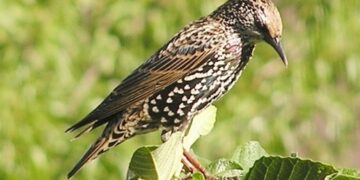
- Conservation status of the species subject to derogation: In Italy the derogations have been granted for the species Fringuello, Peppola, Frosone, Prispolone, and Storno.
For the Chaffinch we are talking about a conservation status of about 390-720 MILLION individuals with a tendency to decrease, where this decrease is we do not know but for Birdlife it is so. For the brambling we attest to an estimate of about 39-66 MILLION individuals here too with a tendency to decrease. For the Frosone we attest to about 7-12 MILLION subjects with a tendency to the stability of the contingent. For the Prispolone the subjects oscillate between 81-126 MILLION units with a tendency to decrease. The cancellation is not known with certainty (as if the above data were certain!) But it is estimated that over 310 MILLION items with an unknown trend (?).
As we can see, we are talking about important numbers, of birds that are healthy and above all whose collection in derogation made on 1% of the annual mortality rate is practically irrelevant for the purposes of conservation. However, a small observation must be made. The Fringuello, Peppola and Prispolone species are declared with a decreasing trend but then, during the more articulated "explanation", specify that it is not possible to state with certainty the real situation of each individual species due to the high distribution area. It is certain that to affirm that the Chaffinch and the Starling are species, one in decline and the other unknown, are at least laughable positions being the two most present birds during the wintering period in Italy and in the states of the Mediterranean basin.
The real challenge that is made to Italy and to the Regions that have operated the derogation regime occurred for the questionable solutions chosen for the operation of the levy. In particular, it is stated that there are obvious gaps regarding the possibilities of real control over the numbers of culled animals, the hunting method (yes in fixed and temporary stalking, no wandering), the time span and the place where to carry out the collection in derogation. In fact, the Interpretation Guide repeatedly states the need to operate under extremely rigid conditions in order to avoid possible errors, for which the possibility of hunting species belonging to the same group is required (Fringuello, Frosone and Peppola - Prispolone shares the same same habitat of the Lark - Starling frequents any type of habitat). The solution to these problems certainly entails new limitations to Italian hunting traditions but we are sure that the Italian hunter is once again ready to receive and put these solutions into practice:
- Withdrawals from Fixed or Temporary Stations only;
- Time span of a maximum of two months with no more than three days;
- 3 Municipalities chosen by the hunter where to make the withdrawal in derogation;
- Immediate signature of the downed garment.
The above indications are examples that would make the findings made by the European Commission obsolete, especially as regards the obligation to immediately sign the demolished garment considered a sine qua non.
We come now to the news of the last hour. MEP Zanoni went on a mission to ISPRA for a clarifying meeting (?) And, it seems, he came out very happy because, as he himself says: “A very useful meeting. Now I have more elements to deal with the Italian failure to apply the EU Birds Directive ”.
Dear Honorable Zanoni, we do not dare to think what elements you have in hand but I guarantee you that we can also get a vague idea by knowing the positions of the ISPRA top management on hunting. At the right moment, the Free Hunting Wildlife Legislative Technical Office will also bring out its elements and perhaps, politics permitting, we will see some good ones. Already now the members that constitute it are not well regarded in the Bolognese area as they know how to read and reason and, above all, remember that Verba volant, scripta manent !!! Up to now his actions in Europe have not allowed him to score any 1 mark, but only and only "defeats away from home", as in the last case of live recalls where, if we remember well, he brought home only a handful of…. finch feathers.
Let's take a very small step back and go to Lombardy where the long-awaited response from the European Commission on the possibility of making the withdrawal in derogation in the Region has arrived. But with a surprise we add.
Hon. Janez Potocnik is one (1) member of the European Commission and therefore is not the European Commission to begin with, so the letter is of a personal nature while remaining the Hon. Potcnik high profile person. The invitation of the Deputy is to urge the Government to fulfill its duty and, that is, to finally legislate on article 19 bis of 157/92, which among other things would also be appreciated by the hunting world.
The second point, perhaps the most interesting, is the clear indication that in Italy the exceptions for letter C) must not be made, in our State Deputy Potcnik tells us clearly that this instrument, which the Interpretative Guide clearly admits and regulates, does not it can be used because in Italy the conditions set out in article 9 of the birds directive do not exist and will never exist. In Italy, traditions do not count for anything even if they satisfy all the requests issued by the European Parliament in which he himself works.
But Hon. Potocnik that in Europe there have been hunting traditions that hunt and prey on eggs using the letter C? Were there any that extend the hunting season for the letter C? What have there been that use the exemptions to kill even Bears and Wolves? Is it perhaps a fault if a Member State has in its traditions the hunting of small game which, among other things, also takes place in other states of the Mediterranean basin?
You May Also Like ..




We leave out the final "threat" of formal notice, but we are disconcerted by a "private" letter written by hoc and addressed to an Italian Minister. Just as the heading of this letter leaves us perplexed where it is clear that whoever writes the letter is the Hon. Potocnik member of the European Commission and not the Commission itself, whose thing would certainly have had a very different institutional weight.
We believe instead, indeed we are very sure, that it was a studied union of intentions between the Hon. Zanoni and the Hon. Potocnik, animated by the same animalist logic that we want to reiterate once again, has not brought relevant results at home to date, a sign that in a European Parliament that respects the logic and respect for the traditions of others are more important than private ideological purposes.
We owed them so much, but we owed a lot to all the citizen-hunters to whom we can only promise not to let their guard down for even a minute, both as members of FACE Italia and as a free and independent Association.
Luca Stincardini - ANLC Wildlife Legislative Technical Office
Stefano Tacconi - ANLC National Executive Member