Symbolic species
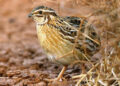
The grey partridge is a symbolic species of our countryside, linked to agriculture and hunting that are now a thing of the past. Once widespread also in Maremma , where its presence is well documented until the 1970s, it has gradually disappeared from our territory. For many years, its return was considered unlikely, especially due to profound changes in agriculture and the resulting loss of habitats favorable to the species. Recently, however, some signs seem to indicate a possible improvement in environmental conditions. The provisions of the Common Agricultural Policy (CAP), particularly crop rotation, may also contribute to recreating greater diversity in agricultural environments. An encouraging sign, albeit with all due caution, also comes from the hare, whose populations appear to be recovering in several lowland areas.
Complex path
It is against this backdrop that the Grosseto Territorial Hunting Area 6 has decided to launch a grey partridge recovery project, recognizing that this is a complex process, the results of which cannot be taken for granted. Two intervention areas have been identified, covering areas between 3.000 and 5.000 hectares: one between the municipalities of Gavorrano and Roccastrada, and the other between Gavorrano and Castiglione della Pescaia. Both include several Hunting Reserve Zones (ZRV), already equipped with acclimatization enclosures, which constitute an important operational base for the project. For the releases, birds belonging to the Italian grey partridge strain, bred at the Scarlino Bird Protection Centre (CPPS), were chosen.
Environmental improvements
Particular attention is paid to environmental improvements, essential to provide the grey partridges with favorable conditions for feeding, shelter, and reproduction. Thanks in part to collaboration with a major local farm, habitat management interventions have been increased. These include maintaining strips of unharvested cereals, especially along the edges of plots, and cultivating areas with grassland mixtures of legumes, managed with mulching outside of the nesting season.
Predation control is also foreseen, in compliance with the plans approved by the Tuscany Region.
You May Also Like ..

Use for dog breeding
During the initial phase of the project, grey partridge hunting will be prohibited to allow the population to establish itself and, hopefully, reach an adequate size. Instead, options for dog breeding, compatible with conservation objectives and also useful for monitoring activities, may be explored. The goal, conditions permitting, is to achieve sustainable hunting management in the future, through conservative harvest plans reserved for hunters who actively participate in management initiatives. This is not, therefore, a simple release program, but an attempt to reconstitute a wild population capable, over time, of reproducing and sustaining itself in the area. The road will be long, and there will be no shortage of challenges. Added to the technical and environmental challenges is sometimes the skepticism, if not the outright defeatism, of a segment of the hunting community itself. Yet, attempting to restore to our countryside a species that has been a part of it for centuries is a challenge worth taking on. And, for the hunting world, it also has a responsibility: to concretely demonstrate that hunting can contribute not only to wildlife management, but also to the recovery of what we have lost (source: FIDC).